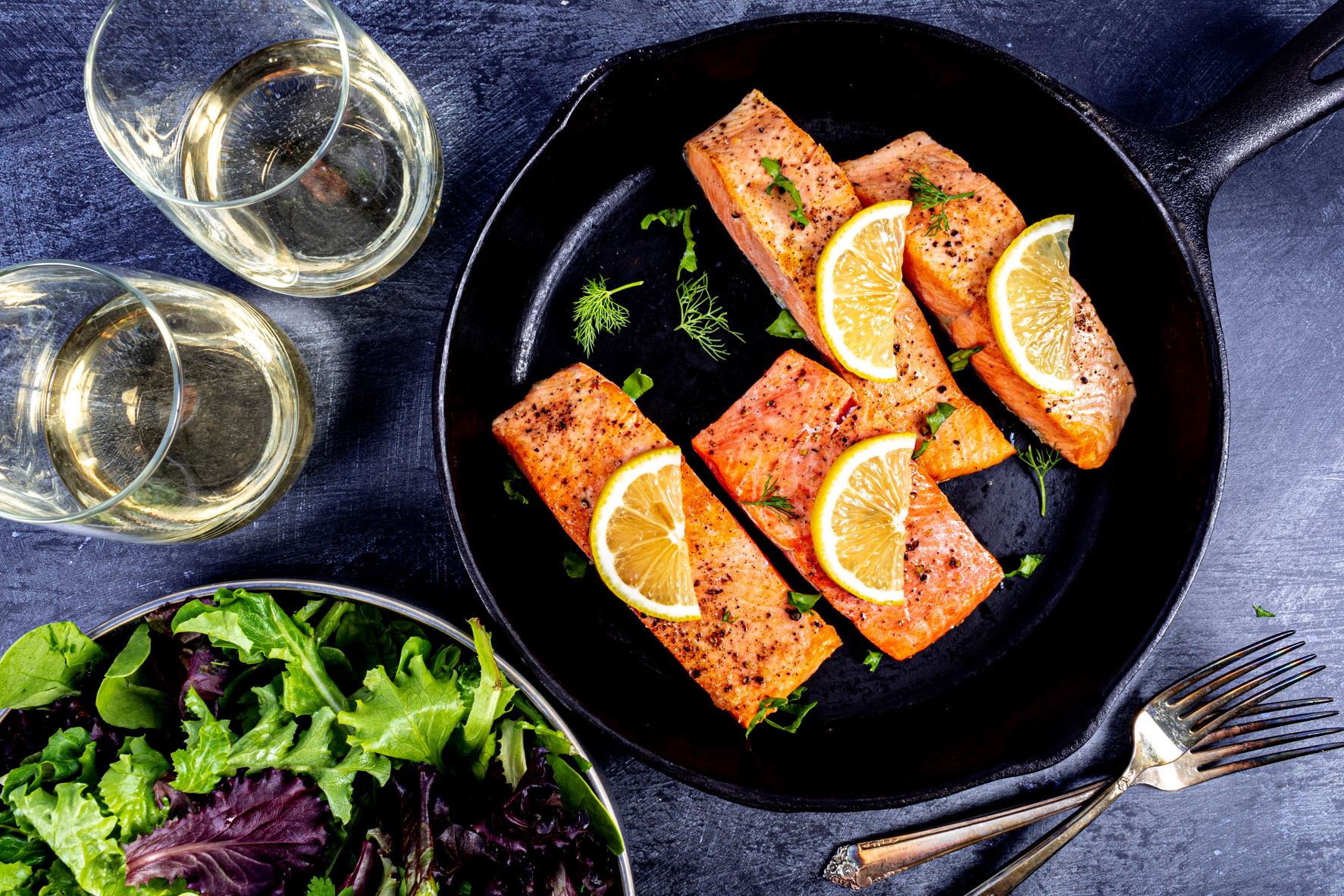





Pan Seared Salmon
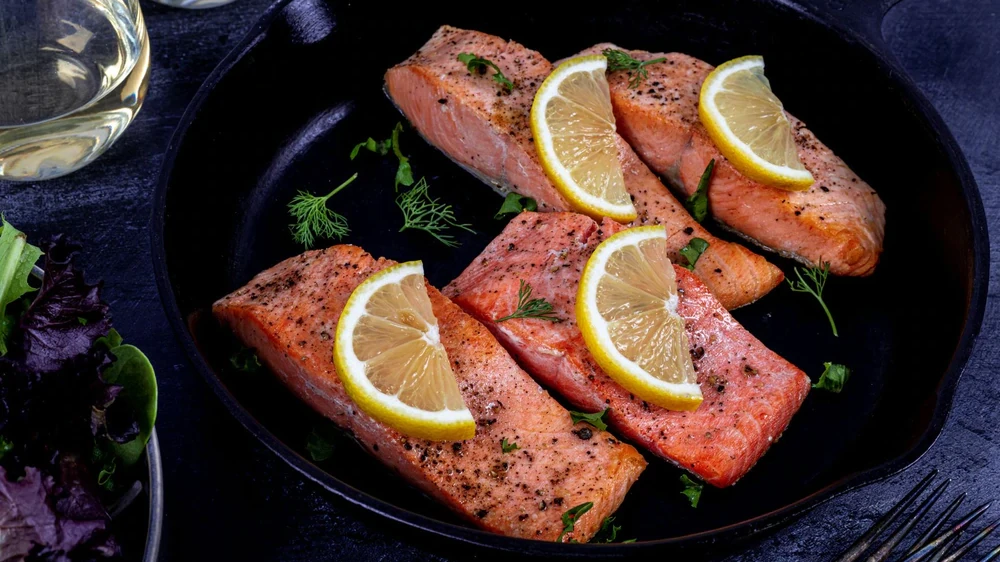
Pan Seared Salmon
Sarena
Rated 3.8 stars by 135 users
Category
Entree
Cuisine
American
Servings
4
Prep Time
5 minutes
Cook Time
10 minutes
Calories
148
Pan-Seared Salmon
One of the easiest and most reliable methods for cooking salmon is also one of the best for creating a wonderful contrast of textures. Pan-searing is a great way to cook salmon because when cooked in a skillet, the fish develops a beautiful golden brown crust while staying tender, moist, and flaky on the inside. This is a great way to bring out the natural richness of the fish without requiring many ingredients, giving you an easy technique for a quick weeknight meal or a more elevated seafood dish.
A well-heated pan and a little bit of oil are what will help the salmon develop that signature crust while staying moist on the inside. By allowing the salmon to cook for a few minutes without touching it, you are allowing the top to develop that nice caramelized texture. Using well-seasoned salmon fillets and cooking them skin-side down can also be an excellent way to achieve a nice texture while keeping the fish tender on the inside.
People also enjoy pan-seared salmon because it can be prepared in no time. Most salmon fillets can be cooked in less than 10 minutes, making for a flavorful meal without the stress of too much preparation. Therefore, this dish can be a quick solution for anyone who wants a healthy and delicious meal in a short period. The end product is a dish that is both crispy and soft, and can be served alongside a variety of sides from fresh salads and roasted vegetables to rice, potatoes, or a squeeze of lemon.
Why You’ll Love This Pan-Seared Salmon Recipe
This recipe for pan-seared salmon is a good example of how simple ingredients and a basic cooking method can result in a dish with amazing taste. With a hot pan and a few ingredients, you can create a dish with salmon that is perfectly crispy on the outside and tender, flaky, and delicious on the inside. It’s a dependable technique that highlights the natural richness of the fish while the preparation remains quick and easy.
Another thing that makes this recipe stand out is its versatility. Pan-seared salmon is easy to pair with a variety of side dishes, from salads and vegetables to rice, potatoes, or pasta. Whether you want a simple dish for a weeknight or a dish for a special occasion, this recipe provides a reliable method for making salmon that tastes amazing, is easy to prepare, and is sure to satisfy.
Why This Recipe Works
This recipe works because it focuses on simple techniques that work well with salmon. The use of high heat with a hot skillet ensures that the salmon develops a nice golden crust, as well as a moist interior. The lack of seasoning ensures that the natural richness and flavor of the fish are highlighted rather than being overpowered.
Another reason why the recipe works so well is its consistency. With only a few simple steps, you can achieve reliable results every time. The short cooking time ensures that the salmon doesn't get dried out, making it a simple way to prepare tender seafood with minimal effort.
Choosing the Best Salmon for Pan-Searing
This pan-seared salmon recipe will work well with several types of salmon, each of which has a slightly different taste and texture.
Sockeye Salmon
Sockeye salmon is recognized for its deep red color and lean texture. When pan-seared, this type of salmon has a strong, rich taste and cooks fast. This is a good option if you like a strong salmon taste.
King Salmon
King salmon is prized for its fat content and buttery texture. This type of salmon will stay moist during pan-searing and is a good option if you like a rich, indulgent salmon.
Atlantic Salmon
Atlantic salmon has a mild taste and tender texture, making it a versatile option for pan-searing. This type of salmon browns well and has a good taste with a variety of seasonings or sauces.
Coho Salmon
Coho salmon has a balanced taste and texture, falling somewhere in the middle of sockeye and Atlantic salmon.
Serving Suggestions
Pan-seared salmon is a flexible dish that goes well with a variety of sides, so it's easy to create a balanced and flavorful meal. The texture of the fish is quite tender, complementing both light, fresh accompaniments and heartier options. When creating a meal with pan-seared salmon, the right sides can enhance the flavor of the fish while adding color, texture, and variety to your plate.
Try pan-seared salmon with:
- Roasted vegetables or asparagus
- Rice, quinoa, or farro
- Green salad with vinaigrette
- Mashed or roasted potatoes
Serve with lemon butter, yogurt sauces, or herbs to add more flavor.
Storing and Reheating
Storing: Leftover salmon can be kept in the refrigerator in an airtight container for a maximum of 2 days.
Reheating: Cooked salmon can be reheated in a pan on low heat or in the oven at 300-325°F. It is recommended not to reheat the salmon in the microwave, as this would cause the fish to dry out.
FAQs for Pan-Seared Salmon
Q: How do I know when the salmon is cooked through?
A: Salmon is done when it easily flakes with a fork and looks opaque throughout. Cooking time will depend on the thickness of the salmon and the type of salmon.
Q: Do I cook the salmon with the skin on?
A: Cooking the salmon with the skin on will keep the salmon from cooking too quickly and will also allow the skin to be crispy when seared, but this recipe will work either way.
Q: What type of pan is best for pan-searing the salmon?
A: A cast-iron or stainless steel pan will give the best sear. A good non-stick pan will also work well, especially for a beginner.
Ingredients
-
4 Sizzlefish Salmon Fillets
-
1-2 Tablespoons Extra Virgin Olive Oil
-
Sea Salt; to taste
-
Freshly Ground Black Pepper; to taste
-
Lemon for garnish
Directions
Pat salmon fillets dry with a clean paper towel.
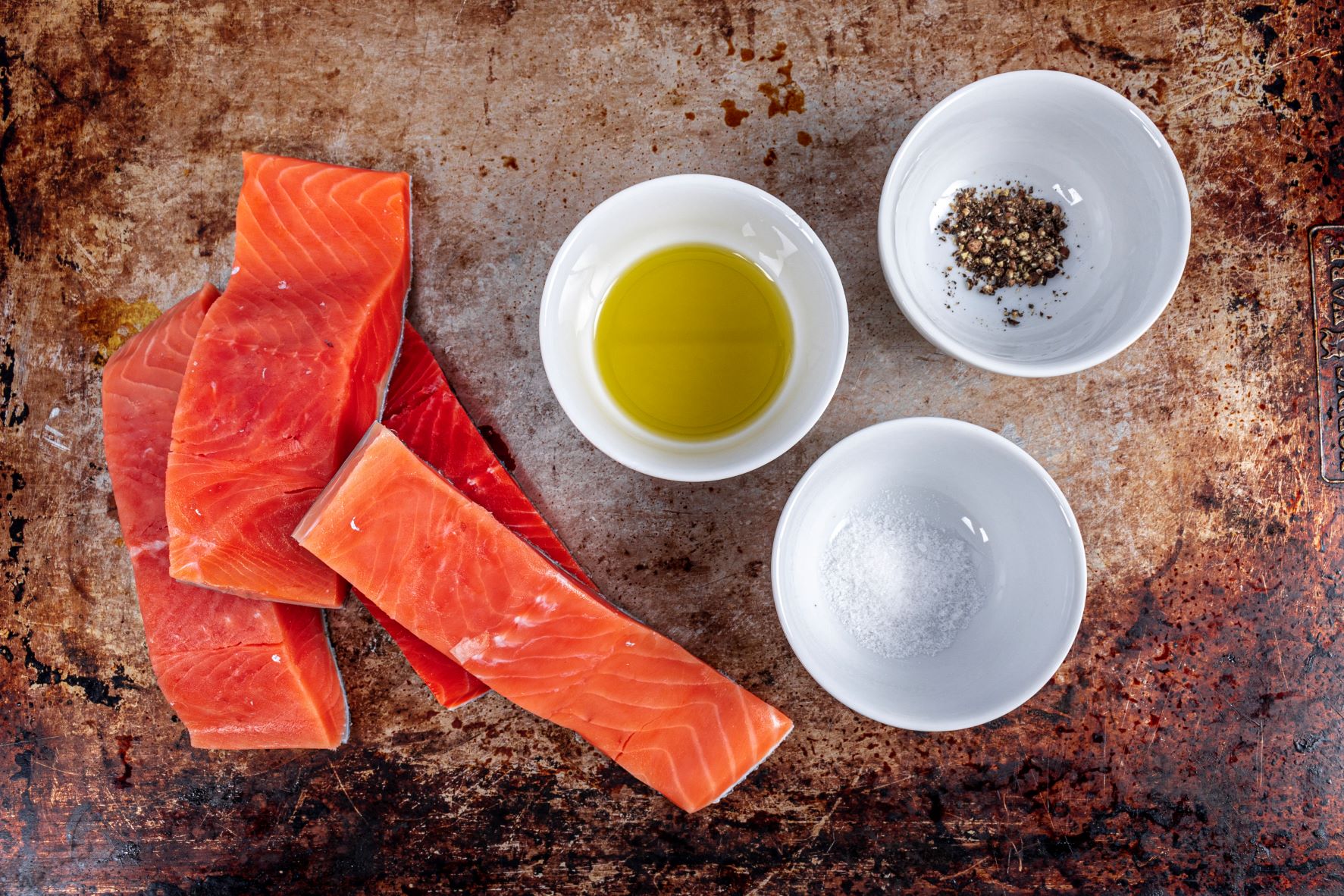
Season the fillets with salt and pepper.
Next heat olive oil in a large skillet over medium high heat until it is shimmering.
Place the salmon skin side up in the heated pan. Allow to cook for 4-5 minutes without moving.
After the 4 minutes, carefully flip the fillets, reducing the temperature of the pan to medium and continue to cook for another 4-5 minutes. The salmon fillets should reach an internal temperature of 145°F.
Once fully cooked remove the fillets to a platter and serve! Squeeze fresh lemon juice over the fillets. Garnish with lemon wedges.